
DAR ES SALAAM – For years, Tanzanian exporters eyeing the lucrative markets of Istanbul and Ankara faced a invisible barrier: the "Tax Trap." But following President Samia Suluhu Hassan’s landmark visit to Türkiye, a new Double Taxation Agreement (DTA) is officially turning the tide for local businesses.
For the investor in Dar es Salaam or the exporter in Mwanza, this isn't just bureaucracy—it's a direct boost to the bottom line.
Ending the "Two-Slice" Problem
Previously, a Tanzanian firm selling tea or cashews to Türkiye risked being taxed by the Turkish government on their sales and again by the Tanzania Revenue Authority (TRA) on those same profits.
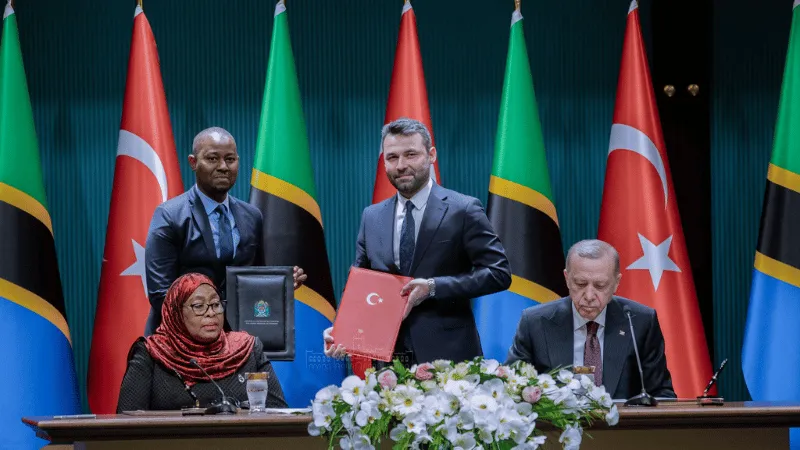
Speaking at an official signing event, the Deputy Permanent Secretary of the Ministry of Foreign Affairs and East African Cooperation, Hon. Ambassador Said Shaib Mussa, said that the signing operationalizes the bilateral cooperation framework agreed in 2025, following President Samia’s historic visit to Türkiye in 2024.
“The main goal is to translate political agreements into tangible outcomes by establishing a joint trade and investment roadmap worth USD 1 billion, and following this signing a Joint Commission meeting will review implementation, identify new priority areas, and strengthen cooperation in strategic sectors such as industry, agriculture, tourism, energy, and human resource development,” said Ambassador Mussa.
What does it mean for businesses?
Agricultural Exporters: If you deal in tobacco, fish, or coffee, your products have just become more competitive. With lower tax friction, you can offer better prices to Turkish buyers without sacrificing your own take-home pay.
Infrastructure & Construction: Tanzanian investors looking to hire Turkish technical experts for local projects will see a drop in withholding tax on service fees and royalties. This makes "importing" Turkish expertise for real estate or manufacturing significantly cheaper.
The $1 Billion Goal: The government aims to grow trade with Türkiye from $281 million to $1 billion annually. This DTA is the engine intended to get us there, specifically favoring the private sector.
A Competitive Edge in the Global Market
As of April 2024, Turkish companies had implemented 14 projects in Tanzania with a cumulative value of USD 6.4 billion, ranking Tanzania third in Africa and first in Sub-Saharan Africa for Turkish contractors. Türkiye’s total infrastructure investment in East Africa stands at USD 4.5 billion, with Tanzania receiving close to USD 2 billion, the largest share alongside Ethiopia.
The single largest Turkish-funded project in Tanzania is the Standard Gauge Railway (SGR), backed by a USD 1.9 billion loan from the Export Credit Bank of Türkiye (Türk Eximbank) and built by Turkish contractor Yapı Merkezi.
By aligning with the C2PA standards (the global "chain of trust" for trade and digital documentation) and now settling this tax framework, Tanzania is positioning itself as the most "investor-friendly" gateway in East Africa.
For a local entrepreneur, the message is clear: the road to Europe via Türkiye is now cheaper, clearer, and much more profitable.