
From Nairobi's expanding global institutional role to Tanzania's rising corporate and financial power, Uganda's emerging oil economy, Rwanda's high-growth transformation and the DRC's command of critical minerals, East Africa is assembling one of the most consequential economic configurations on the continent.
For decades, East Africa was described in the language of tomorrow: young populations, untapped resources, emerging markets and ambitious infrastructure plans. That description no longer captures what is happening. Across the region, infrastructure is operating, financial institutions are becoming more valuable, global institutions are expanding, energy projects are approaching production, critical-mineral value chains are advancing and regional connections are deepening.
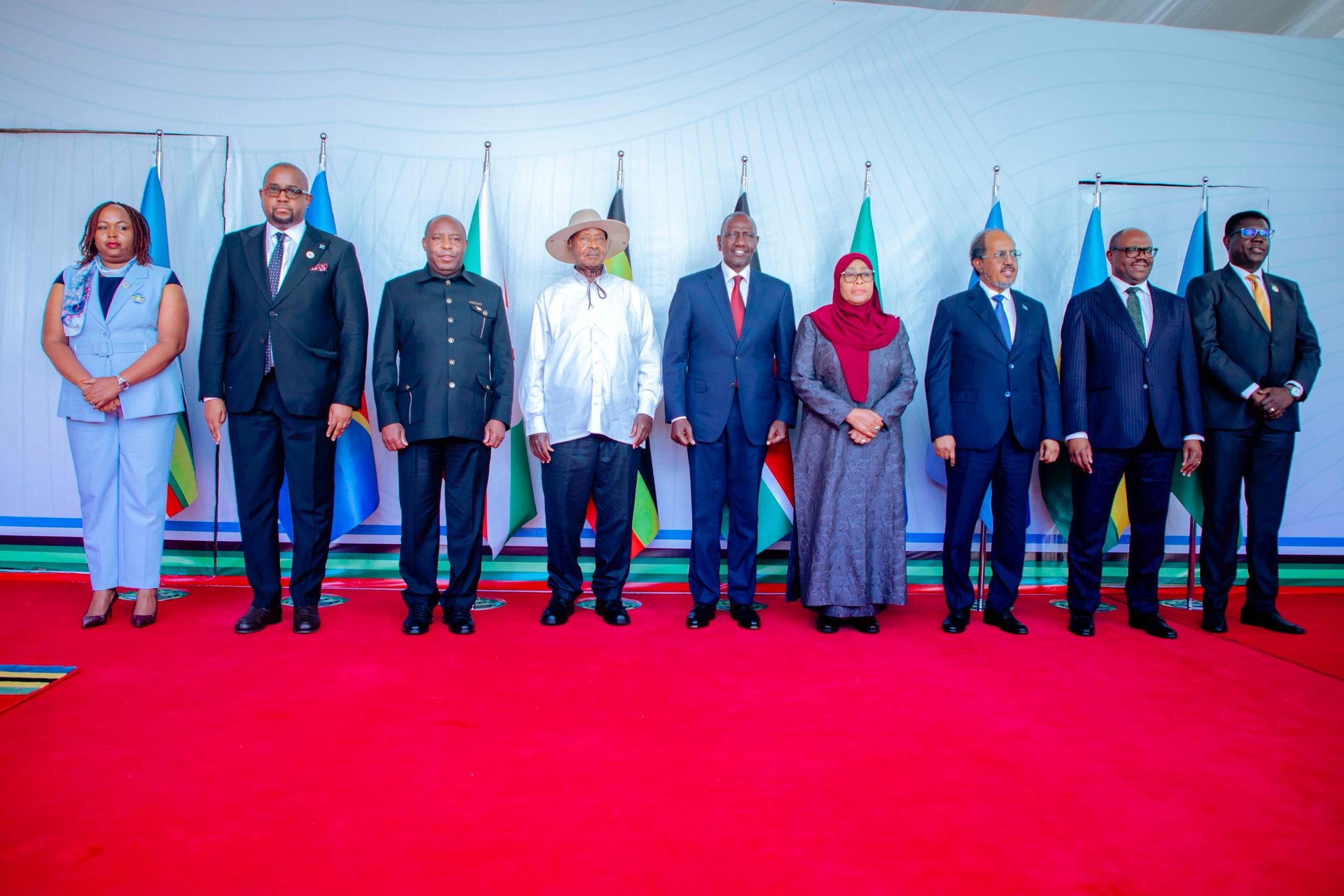
The evidence is increasingly visible in corporate value as well. In African Business’ 2026 rankings, the number of listed East African companies valued above $1 billion rose from eight to fourteen in just one year. Tanzania was one of the strongest drivers of the shift, with CRDB Bank rising from approximately $762 million to $2.7 billion in market capitalisation and NMB Bank climbing from around $1.1 billion to $2.7 billion.
These developments are often reported separately. But viewed together, they reveal a more important story: East Africa is transforming into a global economic power bloc, built on complementary strengths across Kenya, Tanzania, Uganda, Rwanda and the Democratic Republic of Congo.
Kenya: Nairobi is becoming a global African city.
Every major economic region develops cities that connect it to the world. Nairobi is increasingly playing that role for East Africa.
Kenya’s capital already combines finance, technology, corporate headquarters, aviation and professional services. Its global institutional influence is also deepening. Nairobi hosts the United Nations Office at Nairobi, the UN’s headquarters in Africa and the Global South, on land originally provided by the Kenyan government. In 2026, the UN broke ground on a nearly $340 million expansion of its Nairobi complex—the largest investment undertaken by the UN Secretariat in Africa in its 80-year history.
This matters far beyond construction. Cities accumulate influence when institutions, capital, talent, diplomacy and decision-making concentrate within them. Nairobi increasingly sits at the intersection of all five. Kenya’s significance is therefore moving beyond the familiar description of a technology hub. Nairobi is becoming a global African city through which international institutions, capital, enterprise and ideas engage East Africa.
Tanzania: Capital, corridors and commodities are converging.
If Kenya increasingly provides institutional gravity, Tanzania is emerging as East Africa’s strategic crossroads.
Its geography already places it between the Indian Ocean and a vast inland economic space stretching toward Rwanda, Burundi, Uganda, Zambia and the DRC. Tanzania is converting that geography into infrastructure. The modern Standard Gauge Railway is operating between Dar es Salaam and Dodoma, while a further $2.33 billion financing package was secured in 2026 for additional sections of the network.
Alongside the SGR sit Dar es Salaam Port, the Central Corridor, TAZARA, Tanga and EACOP. Increasingly, these are not isolated projects but components of a larger system connecting East Africa’s interior to global trade.
The transformation is equally visible in finance. Tanzania’s banking industry is expanding rapidly, while CRDB and NMB have moved into the top tier of East African corporate valuations. In August 2026, Tanzania also relaxed foreign-exchange rules to allow non-resident investors regardless of nationality to purchase government Treasury bills and bonds, widening global participation in its domestic debt market.

Tanzania is therefore building two kinds of infrastructure simultaneously: physical infrastructure that moves goods and financial infrastructure that moves capital.
Critical minerals add a third dimension. Tanzania has advanced graphite, rare-earth and nickel projects, including the large Kabanga nickel development. The opportunity is no longer simply extraction. Tanzania increasingly has the pieces to connect resources with energy, processing, finance, rail and ports—creating the foundations of a larger industrial platform.
Uganda: Energy becomes regional power.
Uganda brings another strategic asset into this emerging system: energy.
After years of exploration and infrastructure investment, the country is moving toward commercial petroleum production around Lake Albert. Yet the most revealing part of Uganda’s oil story is regional. The crude will move through the East African Crude Oil Pipeline across Tanzania to Tanga on the Indian Ocean.
Ugandan resources and Tanzanian geography therefore become more valuable because they are connected.
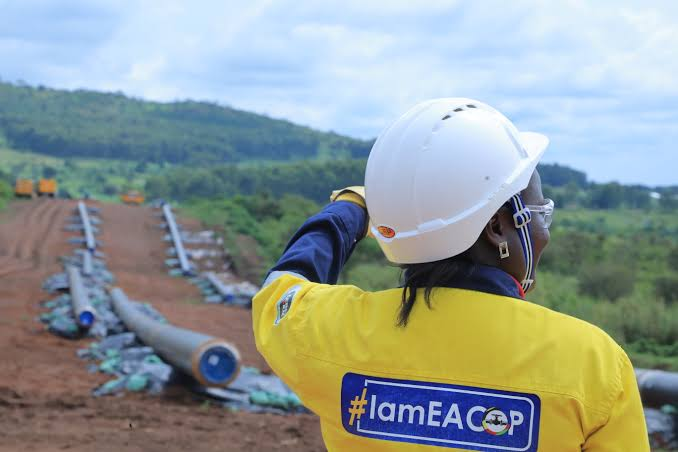
This is the logic of a power bloc. Every country does not need to possess every strategic asset. The strength comes from linking different assets into regional systems. Uganda’s emerging oil economy adds energy, investment and industrial demand to a region already building the logistics and financial architecture capable of supporting it.
Rwanda: Turning execution into economic power.
Rwanda represents another form of strength. Without a coastline, a huge domestic market or Uganda’s petroleum resources, it has built economic weight through services, industry, investment and institutional execution.
The economy expanded by 10% year-on-year in the first quarter of 2026, with services and industry playing major roles. Rwanda demonstrates that East Africa’s rise is not built solely on natural resources. Human capital, institutions, connectivity and the ability to execute matter just as much.
Its landlocked geography also makes integration especially powerful. Every improvement to regional railways, ports and trade corridors expands the possibilities available to Rwandan businesses. Connectivity is effectively changing the economics of geography.
The DRC gives East Africa global strategic weight.
The DRC fundamentally changes the scale of the East African story.
Its entry into the East African Community brought one of the world’s most resource-rich economies into the bloc’s economic geography. The DRC accounts for roughly 73% of global mined cobalt production and is also a major copper producer, while lithium is emerging as another strategic resource.
These minerals sit inside global supply chains for batteries, electrification, electronics and advanced manufacturing. East Africa therefore stretches from some of the world’s most important mineral resources in the continent’s interior to Indian Ocean ports connecting those resources with Asia, the Gulf and global markets.
The opportunity is larger than transporting commodities. It is about how much of the value chain East Africa can own: processing, refining, manufacturing, logistics, financing, engineering and technology.
East Africa’s power is in the combination.
Kenya brings global institutions, technology and financial gravity. Tanzania brings capital, ports, corridors and strategic resources. Uganda adds energy. Rwanda contributes services, institutional capability and execution. The DRC adds minerals the global economy cannot easily ignore.
Individually, these are important national developments. Connected, they become an economic system.
East Africa is increasingly positioned between Africa’s resource-rich interior and the Indian Ocean economy, with access to the Gulf, India, Asia and global trade routes. Its banks are becoming larger. Its corporations are becoming more valuable. Its infrastructure is connecting markets. Its resources are becoming more strategically important. And its institutions are gaining global influence.
The East African story has therefore moved beyond potential. The railways exist. The pipelines are being built. The banks are rising. Global institutions are expanding. Capital markets are opening. Critical-mineral projects are advancing. Regional companies are crossing borders.
East Africa is not waiting for its moment. It is building it.
And the most consequential story may no longer be the rise of Kenya, Tanzania, Uganda, Rwanda or the DRC individually. It is what these economies are becoming together.
Sources: Reuters, United Nations, African Business
Image source: Daily News