
In a landmark event for Southern African infrastructure, President Cyril Ramaphosa and His Majesty King Letsie III officially inaugurated the Senqu Bridge today. Perched more than 2,500 meters above sea level in the rugged highlands of Mokhotlong, the bridge is being hailed as a monument to partnership between the two nations.
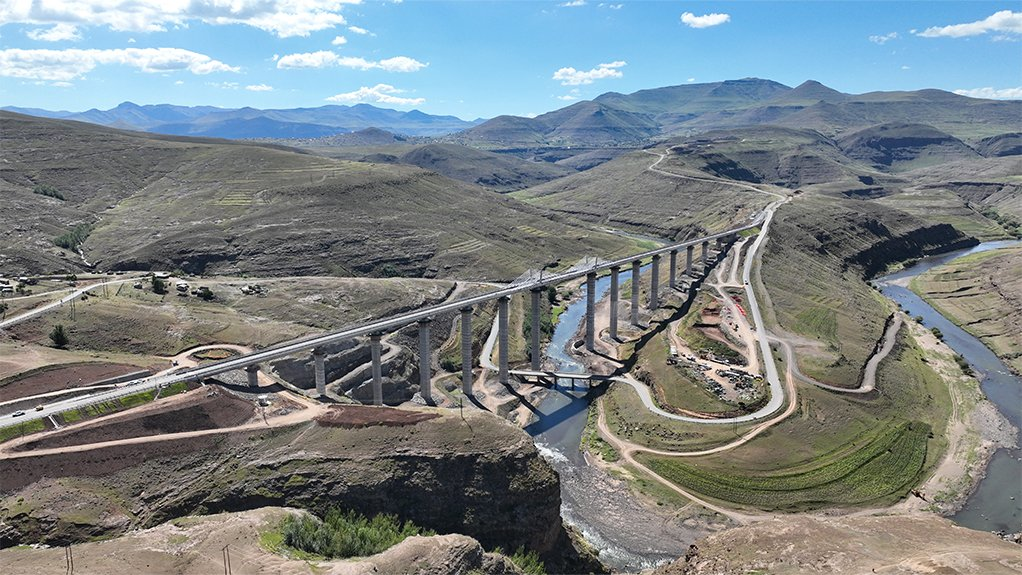
The ribbon-cutting ceremony, held under the crisp mountain air of the Lesotho highlands, marks a pivotal moment in Phase II of the Lesotho Highlands Water Project (LHWP), a multi-billion-dollar treaty-based initiative designed to ensure water security for South Africa while boosting Lesotho's hydropower and economic development.
A Marvel of Modern Engineering
The Senqu Bridge is not just a road; it is a technical feat. Spanning 825 meters in length and standing 90 meters above the valley floor, it is the first extradosed bridge in Lesotho—a design that combines the principles of a cable-stayed bridge with a traditional girder bridge.
| Feature | Specification |
| Total Length | 825 meters |
| Height | 90 meters |
| Construction Cost | Approximately R2.4 billion |
| Labor Force | Over 1,200 workers (majority Basotho) |
| Design Type | Extradosed (Cable-stayed/Prestressed Girder) |
The bridge was constructed using an incremental launching method, where sections of the deck were cast on-site and jacked out over the gorge. This minimized environmental disruption to the sensitive Alpine ecosystem of the Senqu River valley.
Securing the Future: The Polihali Connection
The bridge is a legacy asset essential for the region's survival. Once the Polihali Dam (the centrepiece of Phase II) is completed and its reservoir begins to fill, existing roads in the valley will be submerged. The Senqu Bridge, along with the upcoming Khubelu and Mabunyaneng bridges, will provide the only high-level crossing, ensuring that the district of Mokhotlong remains connected to the capital, Maseru, via the A1 route.
"This bridge tells a story of determination in the face of complexity," President Ramaphosa stated during his address. "It is the largest investment South Africa has ever made outside its borders, and it stands as a symbol of what Africa can achieve when it believes in itself."
Regional Economic Impact
The project has already injected significant capital into the local economy:
Job Creation: Over 250,000 person-days of employment were generated.
Skills Transfer: The Young Professionals Programme integrated local graduates into the engineering teams, building a foundation for future African infrastructure drives.
Bilateral Aid: During the ceremony, President Ramaphosa announced an additional R30 million in humanitarian assistance from South Africa’s African Renaissance Fund to help Lesotho combat HIV and tuberculosis.
What’s Next?
The opening of the Senqu Bridge is the first of many milestones for 2026. Earlier this week, officials also unveiled the Tunnel Boring Machine (TBM) that will drill the 38-km tunnel connecting the Polihali and Katse reservoirs.
With the bridge now open to traffic, the focus shifts to the completion of the Polihali Dam itself, which is expected to increase water delivery to South Africa's industrial hub in Gauteng by over 60%, reaching 1,270 million cubic meters annually.