
KIGALI, RWANDA. The Green City Kigali (GCK) project is no longer a set of glossy architectural renders tucked away in government offices; it is a living, breathing construction site that aims to redefine what it means to be an African city in the 21st century.
With Africa’s urban population expected to double by 2050, the continent faces a choice: succumb to the sprawling, high-emission, and chaotic growth seen in other global regions, or pioneer a new path. Rwanda has chosen the latter.
The Green City Kigali project, spearheaded by the Rwanda Green Fund (FONERWA) with significant financial backing from the German Development Bank (KfW), covers a massive 600-hectare expanse. Its goal is deceptively simple but technically Herculean: to create a carbon-neutral, climate-resilient, and socio-economically integrated urban environment.
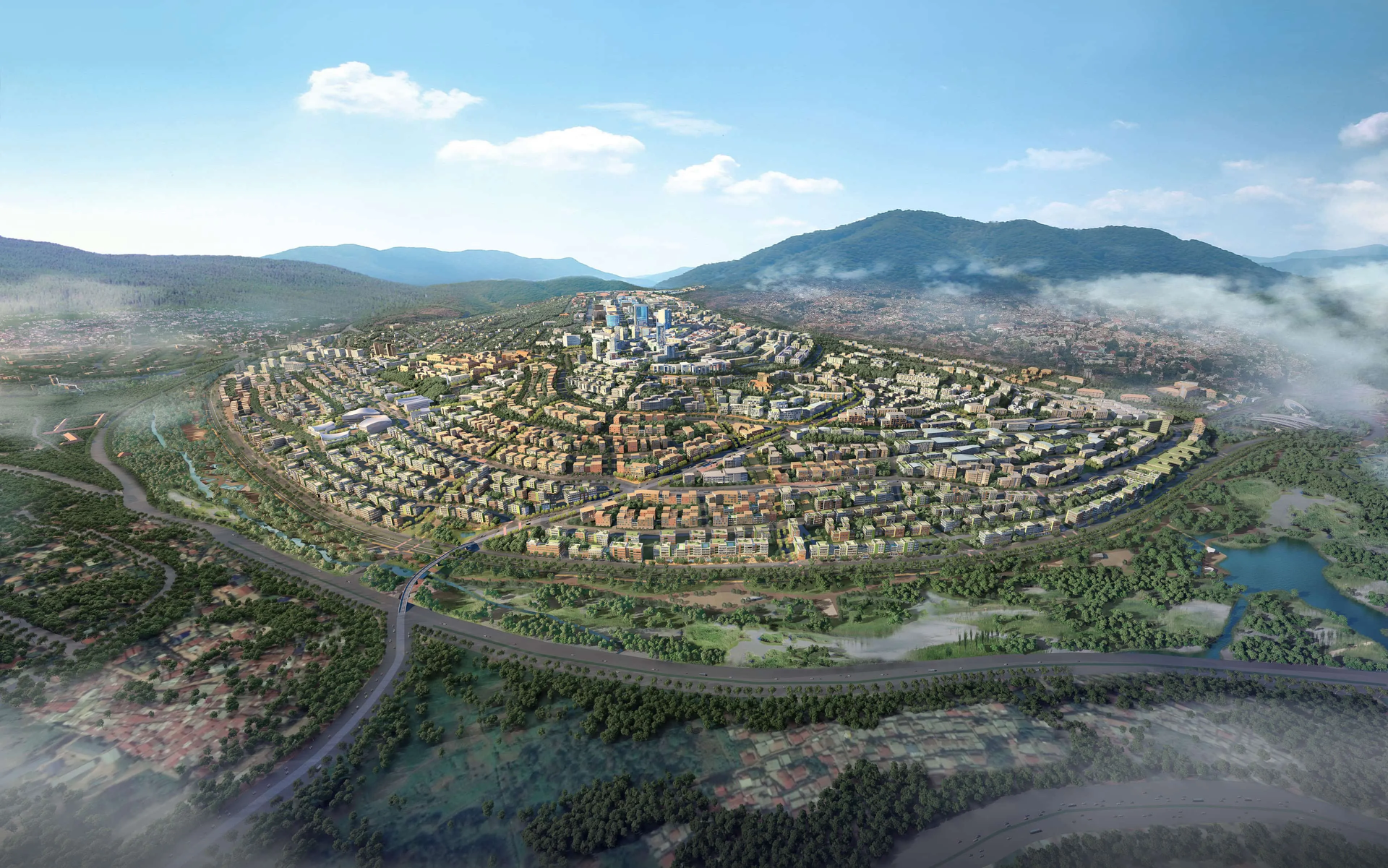
The project is divided into several phases, with the initial 16-hectare pilot site currently under development. This pilot acts as a proof-of-concept, featuring roughly 2,000 affordable housing units that challenge the traditional "concrete and glass" aesthetic of modern development.
"We aren't just building houses," says a project engineer on-site, gesturing toward the foundations of a new apartment block. "We are building an ecosystem. Every brick, every pipe, and every path is designed to work with the environment, not against it."
The Architecture of Low Impact
To achieve carbon neutrality, GCK has turned to passive design. Instead of relying on energy-intensive air conditioning, the buildings are orientated to maximize natural cross-ventilation and daylight. The primary building material is locally sourced compressed earth and clay bricks. These materials have a significantly lower carbon footprint than imported cement and steel, while also providing excellent thermal mass to keep interiors cool during the day and warm at night.
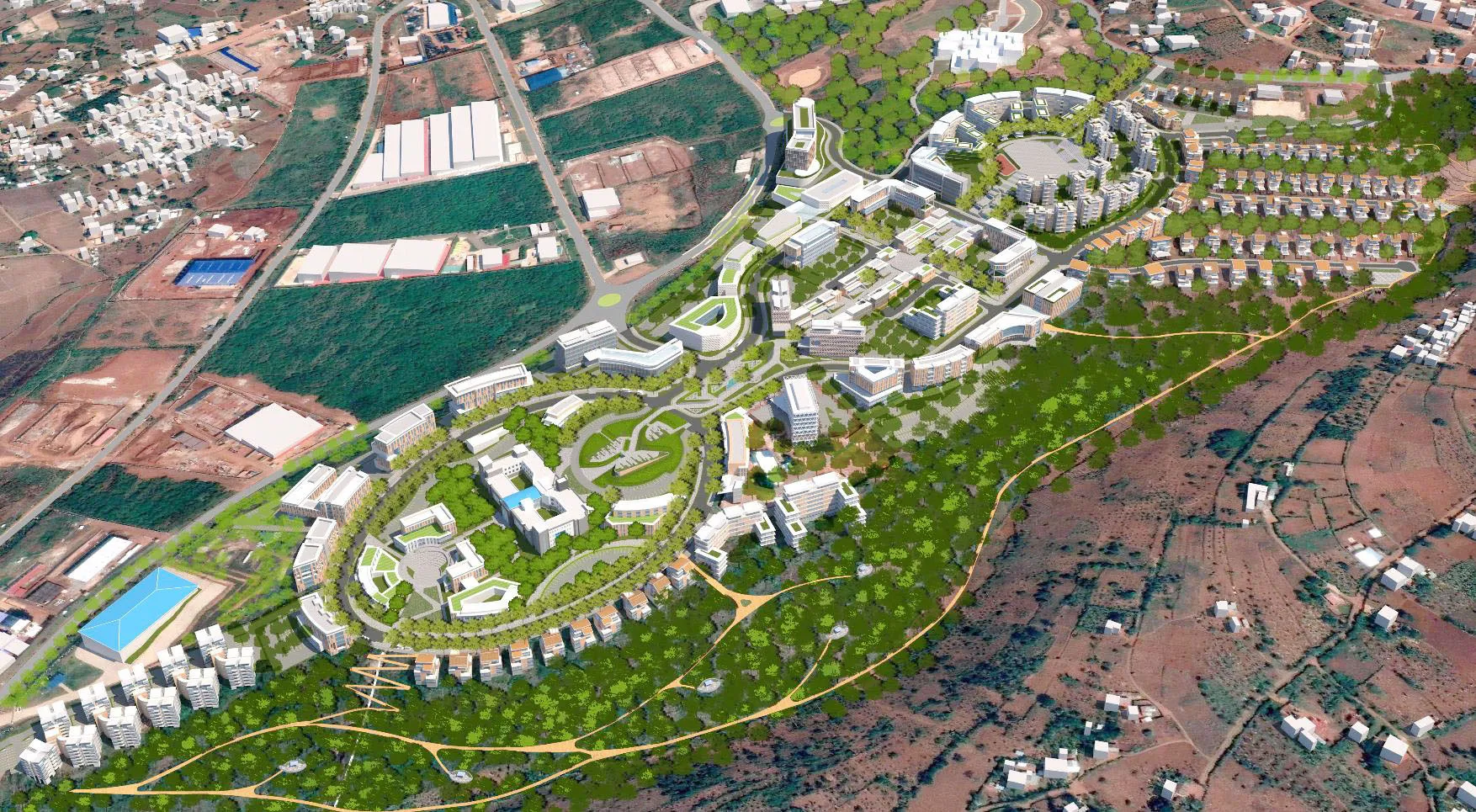
The innovation extends underground. The city is designed with a closed-loop water system. Rainwater is harvested from every rooftop, treated, and stored for household use. Meanwhile, "greywater" from sinks and showers is filtered through on-site natural reed beds and recycled for irrigation and flushing toilets. This circular approach is vital in a region where water security is increasingly threatened by erratic climate patterns.
The 15-Minute City: Reclaiming the Streets
One of the most striking features of the Green City Kigali master plan is its departure from car-centric planning. The development is modeled on the "15-minute city" concept, where residents can access work, education, healthcare, and recreation within a short walk or bike ride from their front door.
By prioritizing pedestrians and cyclists, GCK aims to eliminate the need for private car ownership for the majority of its residents. The roads that do exist are narrow, designed primarily for the country's rapidly growing fleet of electric motorcycles (e-motos) and electric public transit buses. This non-motorized transport (NMT) strategy not only slashes greenhouse gas emissions but also fosters a sense of community that is often lost in fragmented, highway-heavy metropolitan areas.
Urban sponges, dedicated green corridors and restored wetlands are woven throughout the residential blocks. These areas serve a dual purpose: they provide public recreational space and act as natural drainage systems during Rwanda’s intense rainy seasons, preventing the flash flooding and soil erosion that often damage infrastructure in less-planned settlements.
Social Equity and the "Green Premium"
A common criticism of sustainable developments globally is that they often become eco-enclaves for the wealthy. Kigali is working aggressively to avoid this. A core pillar of GCK is social integration. The housing units are tiered to ensure that low-income and middle-income families live side-by-side with higher-income residents.
By using local materials and labor, the project has kept construction costs competitive. Furthermore, the long-term savings on electricity and water bills make these homes more affordable over their lifecycle than traditional dwellings. This is green development as a tool for poverty reduction, providing dignity and resilience to those most vulnerable to the impacts of climate change.
A Laboratory for a Continent
The implications of the Green City, Kigali, extend far beyond Kinyinya Hill. Across the continent, city planners from Lagos to Nairobi are watching closely. The project serves as a laboratory for "home-grown" sustainability. It proves that high-tech environmental standards can be met using traditional African building techniques and local resources.
The project also aligns with Rwanda’s Vision 2050, which targets a high standard of living and a climate-resilient economy. By 2026, as the first residents begin to move into the pilot phase units, they won't just be moving into new apartments—they will be moving into a prototype for the future of the Global South.
Challenges and the Road Ahead
Of course, the road to a green utopia is not without hurdles. Scaling the $1.5 billion project requires sustained international investment and a radical shift in the local construction supply chain. Convincing a population accustomed to the prestige of "modern" materials like glass and steel to embrace earth and timber requires a cultural shift in the definition of luxury and progress.
However, as the climate crisis accelerates, Rwanda's proactive stance is looking less like an experiment and more like a necessity.
The Green City Kigali is a message to the world that Africa is not just a victim of climate change but also a leader in the solutions. It is showing that you can have urban growth that is clean, green, and inclusive.
As the evening sun sets over the valley, casting long shadows across the red-brick skeletons of the first GCK buildings, the future of Kigali looks remarkably bright and undeniably green.