
African electric mobility company Spiro has secured US$215 million in equity financing, marking one of the largest investments in Africa’s electric vehicle (EV) sector. Announced on June 1, 2026, the funding will support the expansion of the company’s battery swapping infrastructure, manufacturing capacity, and entry into new African markets as demand for sustainable transportation continues to rise across the continent.
The investment round attracted support from major institutional investors in Europe and Africa, including Impact Fund Denmark and Equitane, reflecting increasing international confidence in Africa’s clean energy and transportation industries. The funding arrives at a time when many African nations are seeking alternatives to imported fossil fuels while modernizing urban transport systems.
Founded to provide affordable electric mobility solutions tailored to African markets, Spiro has emerged as one of the continent’s leading EV companies. The firm currently operates across Kenya, Rwanda, Uganda, Togo, Benin, Nigeria, and Cameroon, where it has deployed more than 100,000 electric motorcycles and established over 2,500 battery-swapping stations.
Speaking about the milestone, Gagan Gupta, Founder of Spiro and Chairman of Equitane, described the investment as a turning point for the company’s growth ambitions.
“This past year marked a defining strategic milestone for Spiro. Across seven active markets, our deployment of 100,000 electric vehicles and 2,500 smart-swap stations has turned sustainable mobility into an affordable, everyday reality,”
Gupta said.
He added that the company’s impact extends beyond transportation.
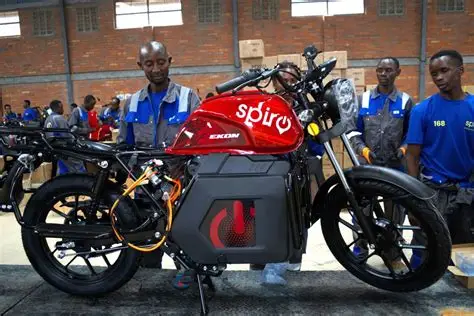
“Spiro has become a major driver of local industrialization, value creation and manufacturing across African markets with 6,000 sustainable direct and indirect jobs. Supported by our global pool of investors, we are entering our next growth chapter to deliver clean, cost-effective energy and transport alternatives to millions of riders across the continent.”
The company plans to use the new capital to strengthen its battery-swapping network, expand assembly operations, and accelerate technology development. Spiro also intends to enter additional high-growth markets, including the Democratic Republic of Congo and Ethiopia, further extending its footprint across Africa.
Industry experts view battery swapping technology as a practical solution for African cities where motorcycles are a primary mode of transportation. Instead of waiting for batteries to recharge, riders can exchange depleted batteries for fully charged ones within minutes, reducing downtime and increasing productivity.
According to Spiro, riders using its electric motorcycles can reduce daily transportation costs by as much as 40 percent, saving up to US$2 per day compared with conventional fuel-powered motorcycles. The company says these savings are helping drive adoption among commercial riders and delivery operators.
The environmental benefits are also significant. A lifecycle assessment conducted on Spiro’s operations in Kenya found that its electric motorcycles can reduce climate impact by 72 percent compared with fossil-fuel alternatives, while also lowering ozone depletion and particulate matter emissions.
Commenting on the investment, Lars Bo Bertram, Chief Executive Officer of Impact Fund Denmark, highlighted both the commercial and environmental potential of Africa’s EV sector.
“We are investing in Spiro and bringing Danish pension capital into one of Africa’s most promising growth markets because we see potential for significant commercial growth in Spiro and electric mobility across Africa, as well as measurable climate impact. That is exactly the type of investment we want to make.”
As African cities continue to expand and demand for affordable transport grows, investments such as Spiro’s latest funding round are expected to play a critical role in shaping the continent’s mobility future. The deal underscores how electric transportation is increasingly being viewed not only as an environmental solution but also as an economic opportunity capable of creating jobs, strengthening local industries, and reducing dependence on imported fuel.