
Global mobile money transactions reached US$2 trillion in 2025, doubling from US$1 trillion in just four years, and sub-Saharan Africa alone accounted for US$1.4 trillion of that total, 66% of the world's mobile money value, according to GSMA's State of the Industry Report on Mobile Money 2026, published in March this year and funded by the Gates Foundation.
The global numbers underneath that figure are themselves striking: 2.3 billion registered accounts worldwide, up 268 million in a single year, and 593 million active 30-day accounts, up 15%. Monthly usage, the share of registered accounts actually transacting each month, reached 25.7%, the highest rate since 2021.
A market Africa built, not just joined
Sub-Saharan Africa and North Africa together hold 1.2 billion of the world's 2.3 billion registered mobile money accounts, more than half. But the more telling figure is growth, not stock: sub-Saharan Africa drove more than two-thirds of the entire world's increase in active accounts during 2025. That distinction matters. It means the region isn't a large market coasting on scale it built years ago; it's still the primary source of the industry's new growth, ahead of Southeast Asia and every other region GSMA tracks.
East Africa leads on value, West Africa on reach
The regional breakdown inside Africa itself is uneven in an interesting way. East Africa moved US$806 billion through 62 live mobile money services in 2025, the continent's largest transaction value by region. West Africa moved less, US$498 billion, but through 76 live services, more than East Africa despite the smaller total — a market still consolidating around fewer, dominant providers rather than one that already has. Central Africa, by contrast, has just 20 live services, and new services launched during the year in Burundi, Sudan, Cameroon, and Togo, a reminder that the frontier of mobile money in Africa is still expanding into new markets, not only deepening in established ones.
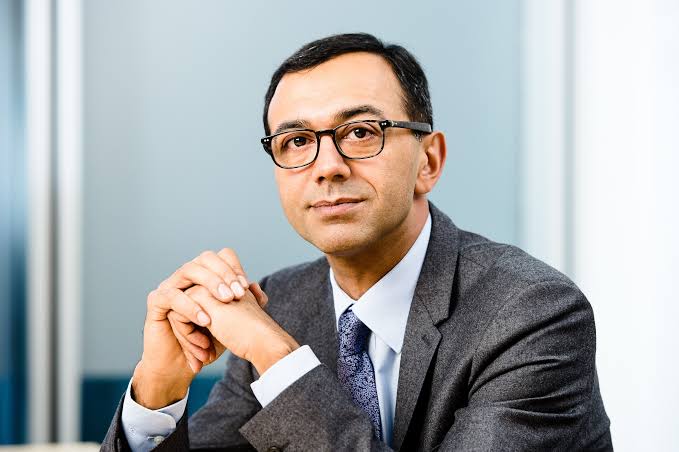
"Mobile money has become one of the world's most impactful financial services. What began as a simple way to move money has evolved into a global financial ecosystem."
The growth story the report doesn't let stand on its own
GSMA's own report resists a clean, uncomplicated growth narrative. Insurance products offered through mobile money platforms grew by a third in 2025, a sign the model is becoming an on-ramp into broader financial services rather than staying a payments tool alone. But a persistent gender gap in account ownership showed up in 7 of the 10 countries GSMA surveyed in depth, and cross-border data transfer regulation remains an active obstacle for 24% of providers, a friction point that sits directly across the path of any continent-wide, interoperable payments ambition tied to AfCFTA.
The headline numbers say Africa's mobile money story is already a success. The report's own caveats say the harder chapter, closing the account-ownership gap by gender and turning cross-border interoperability from aspiration into regulatory reality, is the one still being written.
Sourcing notes
- Global and sub-Saharan Africa figures, regional breakdown, and the Badrinath quote: GSMA, "Mobile money accounted for $2 trillion in transactions in 2025, doubling since 2021 as active accounts continue to grow," published March 24, 2026 (State of the Industry Report on Mobile Money 2026).
- Sub-Saharan Africa regional detail (East/West/Central Africa figures, new-service launches): Connecting Africa, "$1.4T flowed through mobile money in sub-Saharan Africa in 2025 — GSMA," March 26, 2026.