
LUANDA/LUSAKA – The blueprint for a new era of African trade has been finalized. The Africa Finance Corporation (AFC) has officially set a Q4 2027 financial close target for the high-stakes Zambia railway extension, a critical link in the 2,130-kilometre Lobito Corridor.
Designed to slice through the heart of the continent’s Copperbelt, the project aims to bypass traditional, congested routes to the Indian Ocean, instead funneling critical minerals westward to the Atlantic.
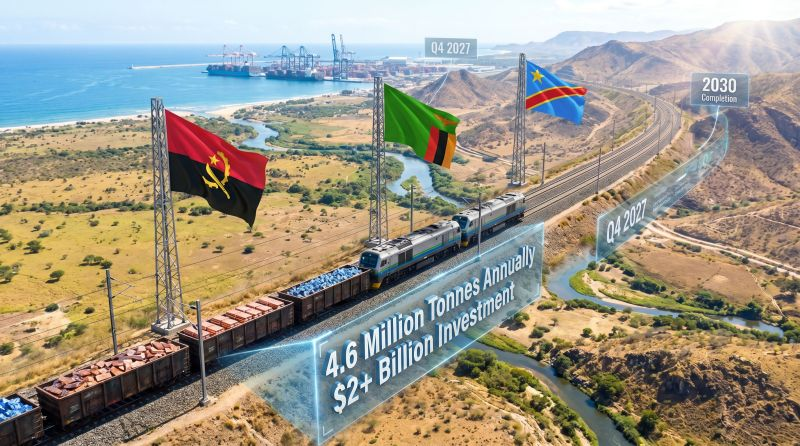 Image by discovery alert
The Road to 2030: A Project Timeline
With feasibility studies concluded, the AFC has shifted into high gear, outlining a strict sequence of milestones to bring the network online by the end of the decade.
May 31, 2026: Deadline for contractor proposal submissions.
Q3 2026: Launch of the global debt and equity fundraising campaign.
Q4 2027: Target for financial close on the Zambian segment.
2030: Full corridor operational completion.
Commercial Traction and Mineral Security
Skeptics of large-scale African infrastructure often point to ghost rails, but the AFC has already secured binding agreements for 1 million tonnes of annual cargo. This figure represents 50% of the minimum project viability threshold, providing a massive vote of confidence for investors before the first spike is even driven into the Zambian soil.
The corridor’s primary mission is the rapid evacuation of copper concentrate from Zambia and cobalt from the DRC, minerals essential to the global energy transition and electric vehicle (EV) supply chains.
Infrastructure Breakdown
The network integrates three distinct national segments to create a seamless "port-to-pit" connection:
| Segment | Distance | Status |
| Angola (Benguela Line) | 1,300 km | Completed (Dec 2023) |
| Zambia Extension | 515 km | Development Phase |
| DRC Connection | 315 km | Planning & Negotiations |
A Geopolitical Chessboard
The Lobito Corridor is more than just steel and sleepers; it is a centrepiece of Washington’s strategy to secure critical mineral access while countering decades of Chinese infrastructure dominance in the region.
The project is fortified by a robust risk mitigation framework involving major development finance institutions (DFIs). Leading the charge, the U.S. International Development Finance Corporation (DFC) has already committed $553 million to the Angolan phase. This backing provides the political risk insurance necessary to navigate a project spanning three different legal jurisdictions.
By establishing an Atlantic exit via the Port of Lobito, the AFC and its Western partners are effectively creating a strategic alternative to the Tanzania-Zambia (TAZARA) route, fundamentally shifting the logistics of African mineral exports for the next century.